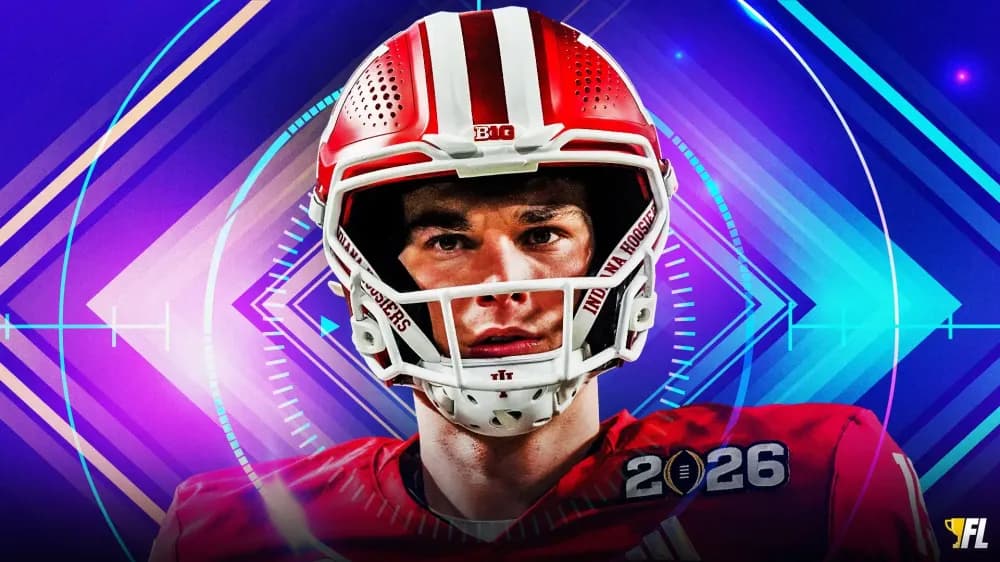
How To Value The 1.01 In 2026 Dynasty Rookie Drafts: Sell High With A Shallow Class?
Jonathan Fuller breaks down how he would approach the 1.01 in dynasty rookie drafts, evaluating how you should value the pick in the trade market given how shallow the draft class is.
We are less than a month away from the NFL Draft, which means rookie draft season will also be here before we know it. Over the next month, I will be writing about what each pick in the first round of dynasty rookie drafts is worth. Today, we're starting with the 1.01.
One of the challenges of this type of analysis is that no two dynasty leagues are the same, and every league will have its own unique trade market. Some leagues have very active trade markets where managers rarely retain their own rookie picks. In other leagues, any trade involving a first-round rookie pick is major news. You know your league best and have to calibrate the value of each pick accordingly.
This article is meant to help find a median value across many types of leagues to serve as a guideline when thinking about trades involving rookie picks. To do that, I will work through a series of questions that examine the value of the 1.01 through different lenses and in different scenarios.
How does the overall strength of the 2026 class impact the value of the 1.01?
I want to start with this macro discussion because I am hearing a lot of extreme opinions about how weak and top-heavy this draft class is. While I generally agree with the sentiment that this isn't a super exciting rookie class, I also believe it is easy to be overconfident in player evaluations.
This is relevant to the value of the 1.01 because there seems to be a "Jeremiyah Love or bust" mentality at the top of drafts, especially in 1-QB leagues. Interestingly, Dwain's work on the Rookie Super Model suggests this idea is misguided. The RSM actually has Carnell Tate as the highest rated rookie, and the gap between Love and the other top prospects isn't that wide.
Personally, I would still take Jeremiyah Love with the first pick, but I am very open to the idea that the gap at the top isn't as wide as the industry consensus suggests. Regardless of what reality is, there is a strong narrative that this is a top-heavy rookie class, which places a premium on having one of the top picks.
How does the value of the 1.01 change for superflex vs. 1-QB?
Another example of 2026 being more extreme than most other years, it is very possible for your superflex rookie draft to only have one QB go in the first round. Fernando Mendoza is widely expected to be the first overall pick in the NFL Draft and will be the first or second pick of just about every superflex rookie draft. After Mendoza, there is a pretty big gap in the consensus rankings down to the next QB, Ty Simpson. If Simpson goes in the first round of the NFL Draft, he will likely jump up into the first round of most superflex rookie drafts, but that isn't the current projection.
In superflex leagues, Mendoza as a viable first pick matters more for the value of the 1.02 (more on that in the next article), but it does also increase the value of the 1.01 because it makes it more appealing to more managers in your league. If there are managers whose biggest need is at the QB position, they now become bidders for the 1.01 when they might not be as interested in trading up for an RB.
What types of dynasty rosters should consider trading away the 1.01?
This is a tricky one. As a dynasty manager, one of the most difficult things to do is to be honest about your team's chances of competing. We all want to be optimistic about things breaking right for our players and winning a championship, but you need to be realistic about where we stack up against the other teams in your league
Said another way, if you got the 1.01 via your own record (and not via trade), you should at least be entertaining offers and negotiating with interested parties. You want to make sure you get good value if you do trade it, but the reality is that one good RB is unlikely to put your team over the top, and you will likely be better off trading for multiple pieces.
Of course, there are exceptions to this; if your team was unnaturally injured last season or you already have a bunch of other picks, you might want to hold onto the 1.01. But if this is your only first-round pick this year, trading down and adding more picks this year and next can be an important step towards rebuilding a depleted dynasty roster.
What is the 1.01 worth when trading veteran players?
The simplest way to think about the trade value of a rookie pick is to consider where the player you would take with that pick would rank in a dynasty startup draft.
This gets slightly more complicated the further we go into the rookie draft because it is harder to predict who will be available with that pick, and there is added value to the optionality of having a pick rather than a specific player. But that's a problem for future articles.
In the case of the 1.01, let's assume anyone who has the pick or wants to trade for it is planning to take Jeremiyah Love or Fernando Mendoza. Fantasy Life's Sam Wallace has Love ranked 12th in 1-QB dynasty leagues. In other dynasty startup rankings, I have generally seen Love in that early second-round range. This puts him near other young, highly regarded RBs like Ashton Jeanty, Omarion Hampton and De'Von Achane.
A cornerstone piece for a fantasy roster like that shouldn't come cheap in a trade. Unless you are doing a straight-up swap for one of the RBs I mentioned above, the starting point is two or more young, solid starters. Players like Ladd McConkey, Breece Hall, Zay Flowers, Bucky Irving, Rome Odunze, Bhayshul Tuten (if you believe he'll be the Jags starter), Harold Fannin and Kyle Pitts are names that stood out to me as the types of players who make sense as pieces to include in a trade for a 1.01. They are young enough to be part of a rebuilding roster and valuable enough that combining a couple of those players makes for a reasonable opening offer.
As I mentioned earlier, every league has its own trade economy, so you will need to adjust your valuation from there depending on the state of the roster that has the 1.01, your league settings and how active the trade market is to decide what, if anything, needs to be added to make for a realistic trade. Most likely, the 1.01 will trade for more than just two of the players I listed above. Add on another startable piece or a second-round rookie pick and you are more likely to get somewhere.
What is the 1.01 worth in other rookie picks?
This is a little bit easier to answer because roster needs are less important when trading picks for picks. If I were trading away the 1.01, I would want to get at least two firsts and a second, but probably more.
I believe there are tier breaks after the 1.04, 1.07 and 2.01 this year based on my rookie rankings. You may have a different opinion, but thinking through the tier of players that will be available with the pick you are receiving is an important part of negotiating a trade you feel good about.
For example, let's say the team with the 1.04 wants to trade up to get the 1.01 from me. I would want at least a minimum of 1.04, 2.04 and a 2027 1st. I would probably try to get a little more, but I definitely wouldn't entertain anything less than that.
If the team at the 1.07 wants to trade up, I would require at least three more rookie picks (i.e., the 2.07, a 2027 1st and a 2027 2nd) to consider the offer. In practice, I'll probably need a combination of picks and a young player that I like to get the deal over the line.
The Final Verdict
In closing, I think this is an interesting year to think through trading the 1.01. The consensus opinion is that there is only one or two elite prospects. Whether you agree with that sentiment or not, the narrative is certainly shaping trade values. If you have the 1.01, leverage this to your advantage and push for more than what would be considered fair value in a normal year. If you want to trade for the 1.01, be prepared for a high asking price and be patient to see if something happens to bring down the asking price.
On that note, it is important for fantasy managers to think about the timing of when they make trades. If I am trading away first-round rookie picks, I usually try to do that before the NFL Draft because fantasy managers tend to be too optimistic about landing spots. If I am trading for rookie picks, I would prefer to do that shortly after the NFL Draft.
We know rookie values will change as a result of landing spots, and they will be impacted negatively more often than positively, especially at the top. Before the NFL Draft, we can all dream about ideal team fits, but in reality, we will be disappointed by where some of our favorite prospects go. For example, there have been rumors about the Tennessee Titans being interested in Jeremiyah Love at fourth overall. Meanwhile, the Dolphins are in play to take one of the top WRs at 11th or 30th overall.
These are the kinds of landing spots that would materially hurt the value of players we are excited about today. Especially compared to landing spots that some fantasy managers are dreaming of, like Love going to the Commanders or one of the top WR prospects landing with the Rams.
Lastly, don't expect to be able to make a trade happen right away. If you are interested in making trades involving rookie picks, send out some initial offers and make your interest known. Sometimes you need to socialize an idea to get the other manager comfortable with the idea of doing a deal. Be patient, but persistent and you'll be surprised how many deals can get done.

Join Our Newsletter
Trusted by 400,000+ fantasy football players. Get access to Fantasy Life's free award winning newsletter and tools, all in one step.
By registering or logging in, you agree to our Terms of Use and Privacy Policy.
Players Mentioned in this Article





Published Updated